


Hidden Disabilities Sunflower program makes Region more accessible


 Back to Search
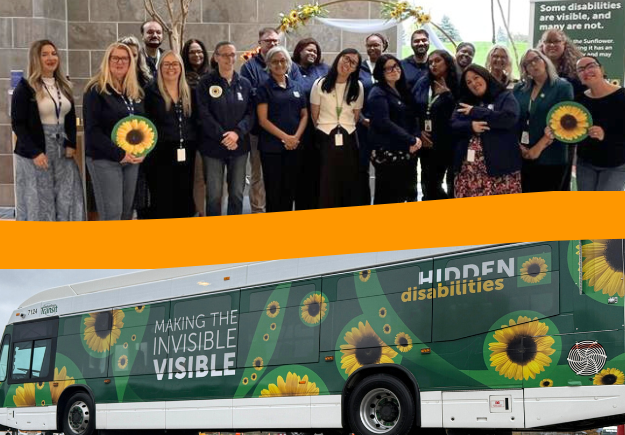
In a step toward greater inclusion, the Region of Durham and Durham Region Transit (DRT) have proudly joined a global movement that’s changing lives in the most meaningful way – by recognizing not all disabilities are visible.
What is the Sunflower program?
The concept is simple but powerful: people who have hidden disabilities such as chronic pain, autism, dementia, mental health conditions or sensory impairments, can choose to wear a sunflower pin or lanyard. The discreet symbol signals to staff that they may need extra time, assistance or patience when navigating Regional services and public transit.
“The Sunflower program is a win-win,” shares Charlyn Archer, DRT Conventional Operator and Woman’s Advocate. “It enables me to be patient, compassionate and understanding of others and empowers me to receive patience, compassion and understanding from others. I love this program.”
Where is the Sunflower pin recognized?
Public front counter and customer service staff at the following Regional locations are able to recognize and support customers who choose to wear a Sunflower pin:
- 605 Rossland Road East, Whitby
- 140 Commercial Avenue, Ajax
- 200 John Street, Unit C1A, Oshawa
- 200 John Street, 2nd floor, Community Resource Centre, Oshawa
- 2 Campbell Drive, Unit 301/305, Uxbridge
Region of Durham customers and DRT riders can wear their Sunflower pins to signal that they may need extra time, assistance, or patience.
Why it matters
Hidden disabilities can be temporary, permanent or situational and can affect neurological, cognitive, physical, or chronic health. The program offers peace of mind.
For many staff members, the Sunflower program is more than a symbol, it’s personal. “The Hidden Disabilities Sunflower symbolizes unseen strength. It reminds me that while my daughter’s disability isn’t visible, it shapes her world every day,” says Jamie Gavin, a DRT Coordinator with On-Route Services. “The Sunflower encourages understanding and empathy — a gentle reminder that even when challenges can’t be seen, a little patience and small acts of kindness can help everyone feel recognized and supported.”
“When I found out about the Hidden Disabilities Sunflower Program, I immediately wanted to sign my son up for it. He is a 24-year-old that wants to have some independence while living on the Autism Spectrum with a Pervasive Developmental Delay diagnosis. This program gives me the comfort of knowing that when he is out in the community people will see the lanyard and be able to assist him if needed, which is a huge relief to me,” says Kirsten Clarkson, Customer Service Specialist, myDurham 311.
This initiative empowers individuals with greater ease and dignity, while encouraging staff and residents alike to recognize and respond with empathy and support.
Creating a more inclusive community
By embracing the program, the Region of Durham and DRT are helping build a more compassionate and inclusive community one sunflower at a time. “Feeling empowered to travel freely and access local services can unlock the rich contributions of those with non-visible conditions as they live, work, and play in Durham Region,” says Clare Kumar, Regional Director of the Hidden Disabilities Sunflower program in Canada.
How to get a pin
Sunflower pins are free of charge. Here’s how to request one:
Region of Durham
- Complete the online Region of Durham Sunflower program pin request form
- Email 311@durham.ca
- Call 311.
DRT
- Order online at DurhamRegionTransit.com/SunflowerProgram/
Call DRT customer service at 1-866-247-0055
For more information, visit:
Contact Us