


Winter’s snow match for Durham Region’s road maintenance crews


 Back to Search
For many people, a weather forecast of snow may have them wishing for hibernation and mentally preparing for the joys of shoveling. For our Durham Region Works Department crews though, these forecasts are a call to action as they prepare operators, vehicles and equipment to tackle the chilly challenge of ensuring our Regional Roads are in the safest conditions possible.
Calm before the storm
Although Ontario’s regulations for winter maintenance require snow clearing equipment to be dispatched once four centimetres of snow has accumulated on road surfaces, our crews also incorporate preventative anti‑icing methods in advance of snow events to support effective winter operations. Here are two anti‑icing methods our crews use:
Direct liquid application
- This technique involves applying a liquid salt brine to dry roads in advance of forecasted winter conditions. This technique can help reduce ice and frost from forming on the roads and requires less salt.
- This technique involves pre-wetting road salt by spraying the salt with brine at the vehicle’s spinners, which is then applied to the roads. Pre-wetting helps keep salt on the road instead of bouncing off.
And snow it begins
During a winter storm, more than 70 pieces of winter maintenance may be deployed, including our snowplows. The vehicles are equipped with technology including:- GPS units so the vehicles can be remotely monitored to help optimize routes and collect data such as salt application rates.
- Laser guidance units to help our operators stay within the travelled portion of the road, especially during periods of decreased visibility due to snow.
- Infrared thermometers that measure air and road surface temperatures to provide the best road surface treatment.
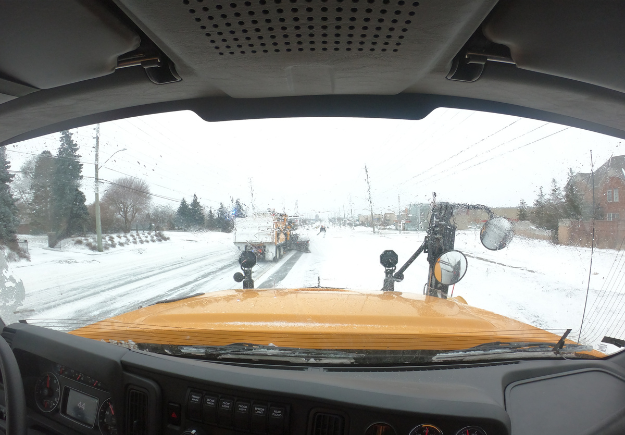
Staying safe with snowplows
When the snowplows are out operating, it’s important that you and all motorists on the road know this important snowplow safety information:- Snowplow operators must travel at reduced speeds, so be patient and slow down when driving behind them.
- Although there are many mirrors to help the operator see around the vehicle, visibility is still limited, especially behind the “wing” (the plow blade that extends to the right of the vehicle).
- Drivers should never pass a working snowplow; the road is safer behind the plows.
By taking these simple precautions, we can help reduce winter driving risks while also ensuring our operators are able to safely clear our roads.
To learn more about how we are making Durham roads safer visit durham.ca/VisionZero. To learn more about winter road maintenance, visit durham.ca/RoadMaintenance.
Never miss a story. Subscribe to receive weekly updates at durham.ca/ThisWeek.
Contact Us